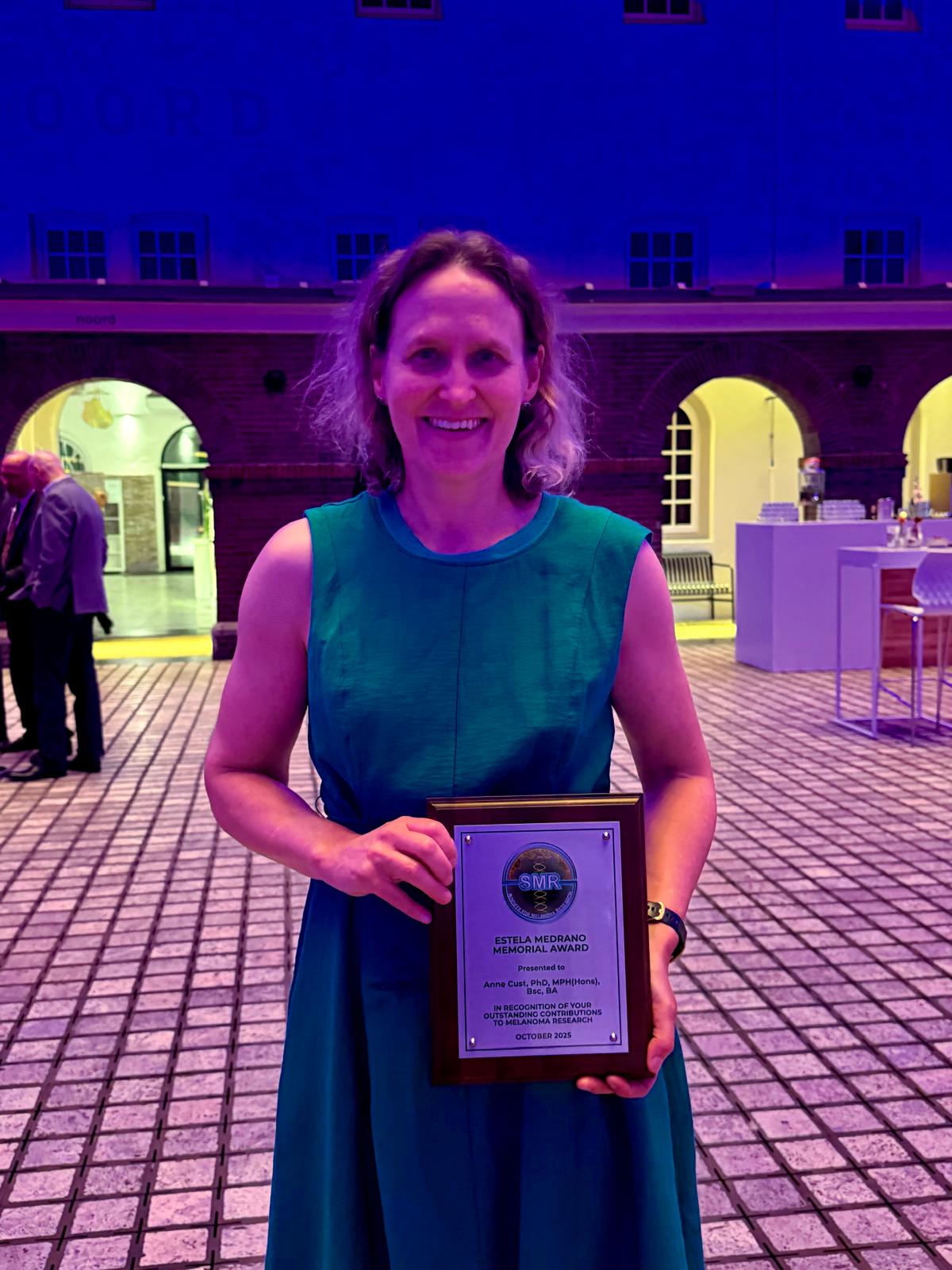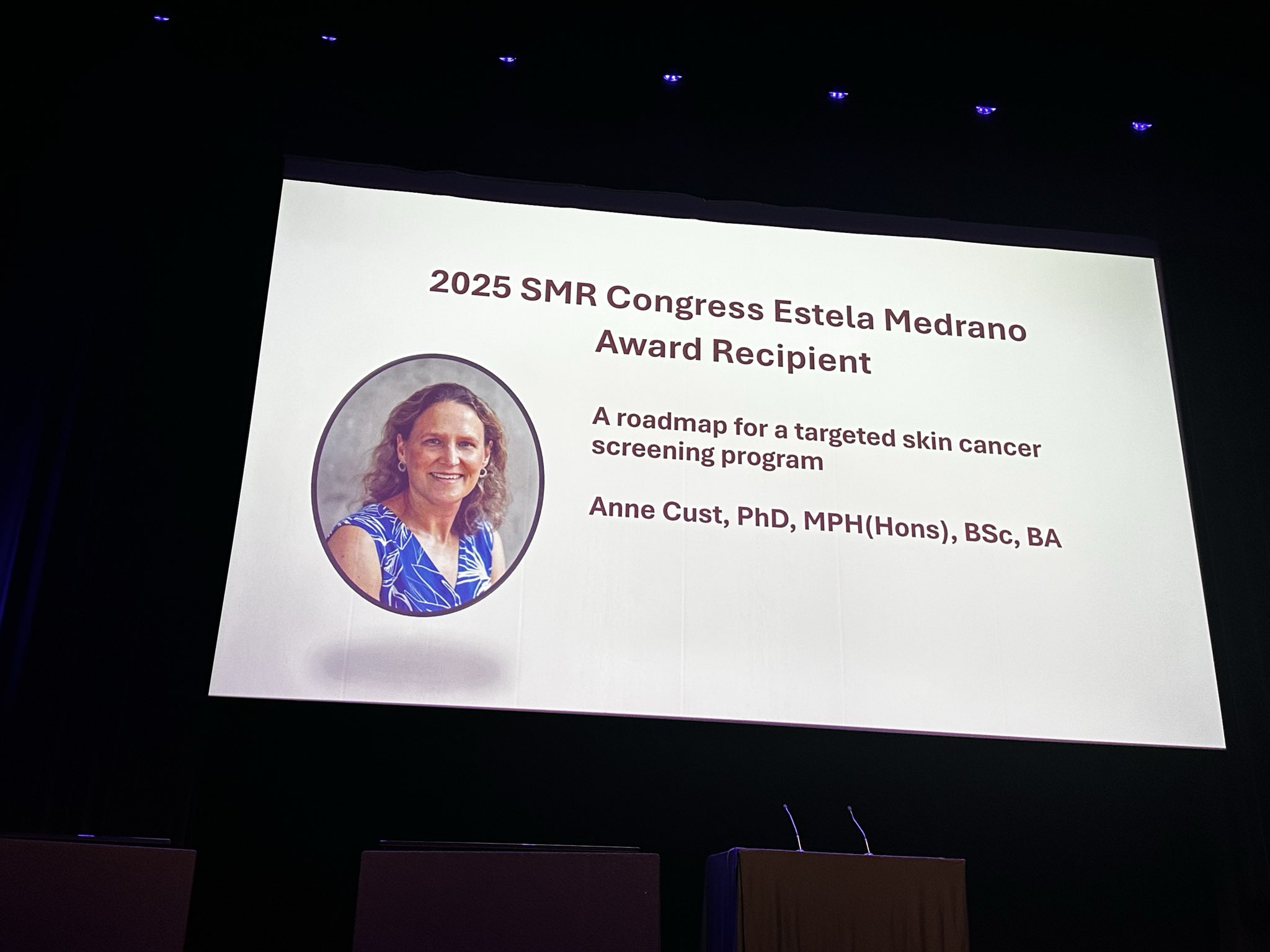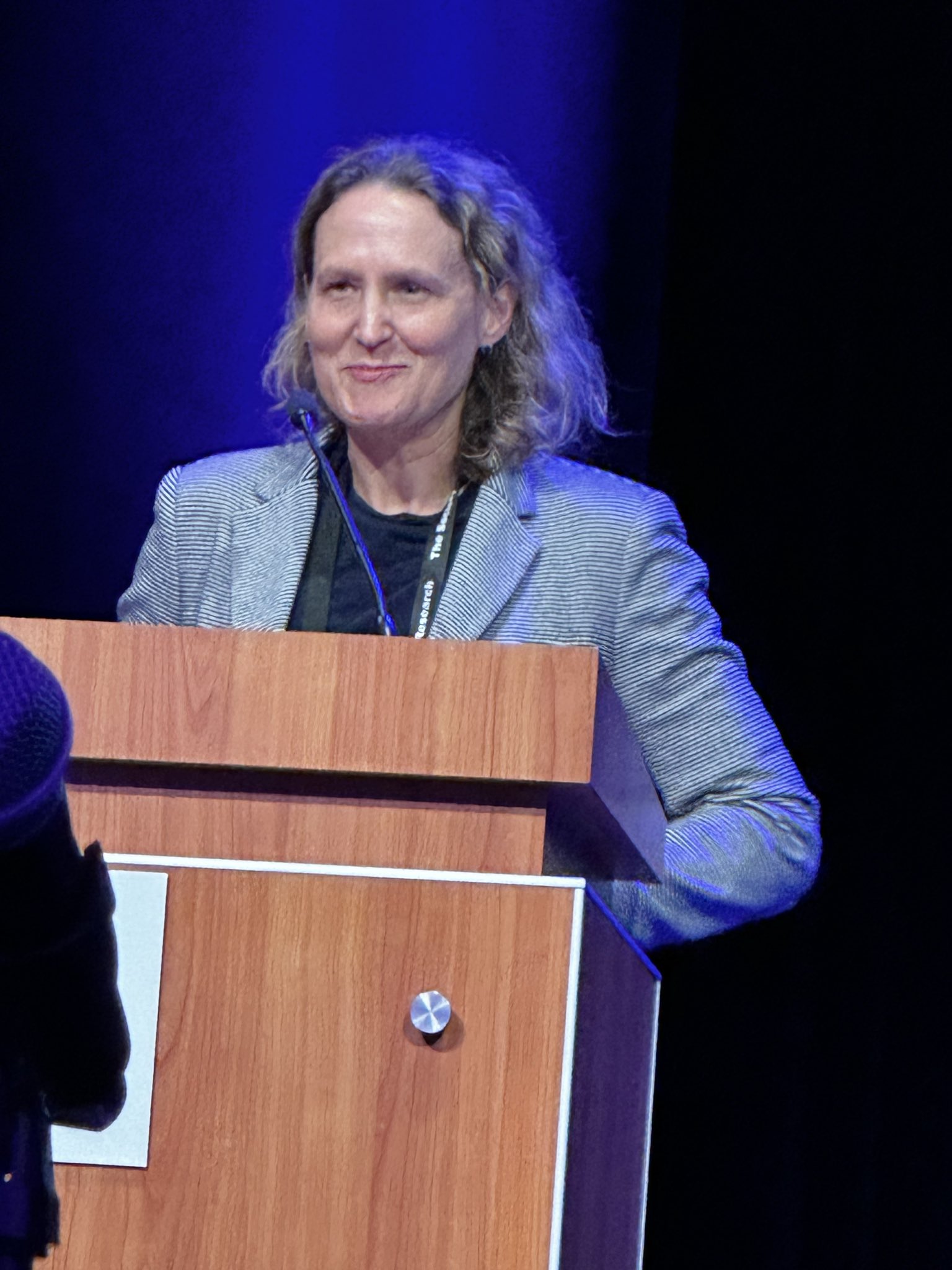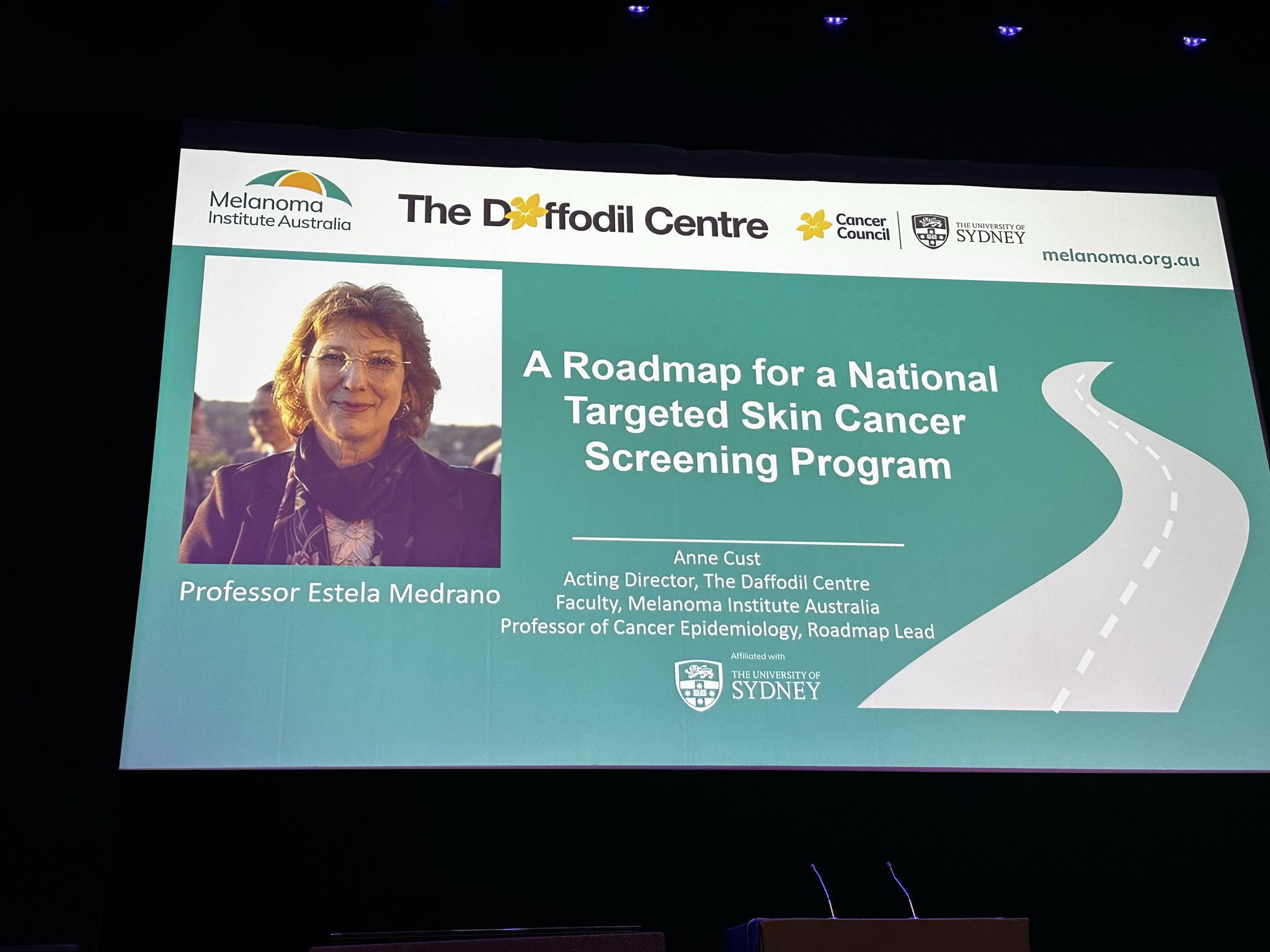

Professor Anne Cust is the recipient of the 2025 Estela Medrano Award, which was presented at this year’s Society for Melanoma Research (SMR) Congress in Amsterdam.
She joins a distinguished group of past recipients, including Professor Georgina Long AO, in being honoured for advancing the field.
This award recognises Professor Cust’s outstanding contribution to melanoma research, specifically her work on “A roadmap for a targeted skin cancer screening program.”
The Estela Medrano Award is selected each year by the SMR Local Organizing Committee and is awarded to a woman who has made significant and lasting contributions to melanoma research.
What does this recognition mean to you?
I am deeply honoured to be the recipient of the 2025 SMR Estela Medrano Award, I feel that the award is not just for me but for my colleagues too, as my research takes a team science approach and is very collaborative and multidisciplinary. To me, the award is recognition that the research that we do is meaningful and impactful.
Tell us about the work that has led to this award?
I am an epidemiologist and my team’s research focuses mainly on skin cancer prevention and early detection. Some of our key findings over the past decade or so include research that found using sunbeds was an important risk factor for melanoma among young Australians – this contributed to the ban of commercial solariums in Australia which has been estimated to prevent about 30,000 melanomas and half a million other skin cancers in young Australians over their lifetime. We also contributed to the discovery of new genomic risk factors for melanoma and showed how knowledge of personal genomic risk can impact skin cancer prevention and early detection behaviours, and we have developed melanoma risk prediction tools and incorporated their use into clinical care to help personalise prevention and screening based on individual risk.
What are you currently working on?
A large new program that I am leading with the Melanoma Institute Australia and supported by my team at the Daffodil Centre and many other collaborators is a 4-year government-funded Roadmap for a National Targeted Skin Cancer Screening Program. The Roadmap aims to develop an evidence-based screening program that targets those in the population at high risk of developing skin cancer and is equitable, high quality and cost-effective, for consideration by the Government.
Why is it important to you to see more girls and women working in science fields?
Diversity, including gender diversity, is important in team science because this brings different perspectives and helps to address complex scientific problems.